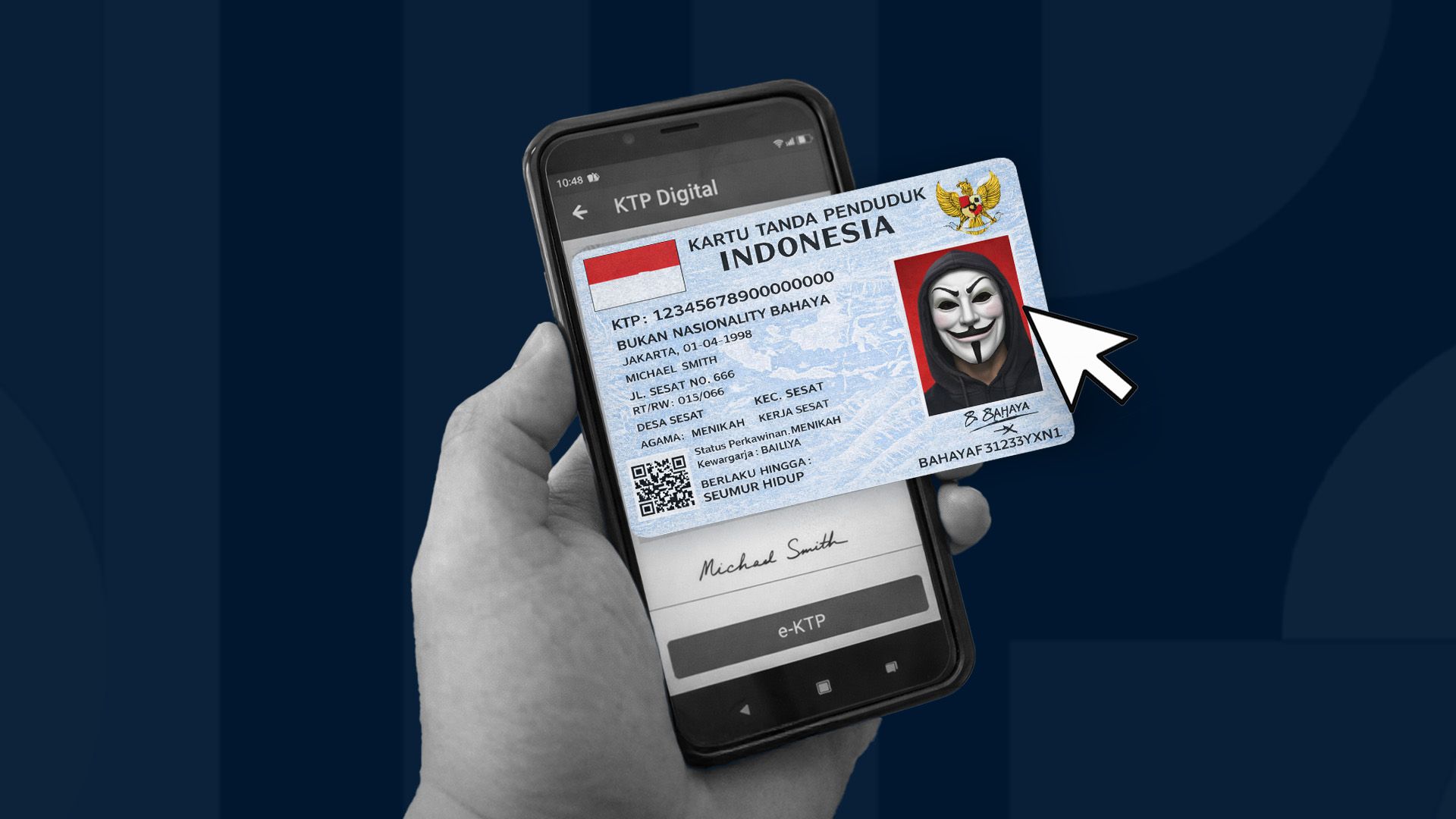
Many people only realize something is wrong when they receive a bill, a debt collector's call, or a notification from a service they never signed up for. They're sure they never shared sensitive information with anyone suspicious. Situations like these are often linked to digital ID card fraud, which operates silently and is hard to detect from the start.
In digital services, an ID card is no longer just a physical document. It has become data used to unlock access to various services — from account registration to financial product applications. When this data is used without permission, the consequences can surface long after the initial incident.
When Your ID Card Becomes Digital Data
The shift to online services has made processes faster and more convenient. ID card photos and personal identification data are now standard requirements for accessing many services. But once that data is uploaded, we often have no idea how it's stored, used, or shared. In the context of digital ID card fraud, this creates opportunities for misuse without needing direct access to the data owner.
How Can Your ID Data Be Used Without You Knowing?
In many cases, there's no single major event that directly leads to data misuse. It often starts with things that seem trivial. Data breaches remain one of the main sources — leaked data can be reused across different platforms, even years later. On top of that, requests for ID card photos by parties claiming to be official are also common, especially during certain registration or verification processes. These are the patterns frequently exploited in various digital ID card fraud schemes.
If a service only checks whether the documents are complete without verifying who is actually using them, unauthorized use can happen without being detected early on.
When Data Misuse Meets Deepfake Technology
The risks don't stop at leaked data being reused. Advances in technology are making ID data misuse increasingly difficult to spot. Face photos from ID cards or old selfies can now be combined with facial manipulation technology to create visual representations that look convincing. In some cases, these fabricated faces are used to pass verification processes as if the data owner were actually present.
This phenomenon is part of a broader discussion on how deepfakes are being leveraged in identity fraud, which is explored further in this VIDA article:
Deepfake AI: Types, Risks, and Solutions to Combat It
Why Do Data Owners Often Only Find Out Later?
Unlike losing a physical item, data doesn't feel "lost." Your ID card is still in your hands, so there's no immediate sign that triggers alarm. The impact only shows up when unrecognized activity appears — like fraudulent loans or problematic accounts. In many cases of digital ID card fraud, victims only find out after the process has gone quite far and involves multiple parties.
What Can You Do as a User?
As individuals, we can't control the internal systems of every platform. But there are some simple steps that can help reduce the risk. Being more selective when asked to upload your ID card photo is a good starting point. Pay attention to whether the service explains the purpose of data collection and how it's protected. If the request feels too easy or lacks transparency, it's worth pausing and reconsidering. Taking a moment to think is often safer than responding right away.
.png)