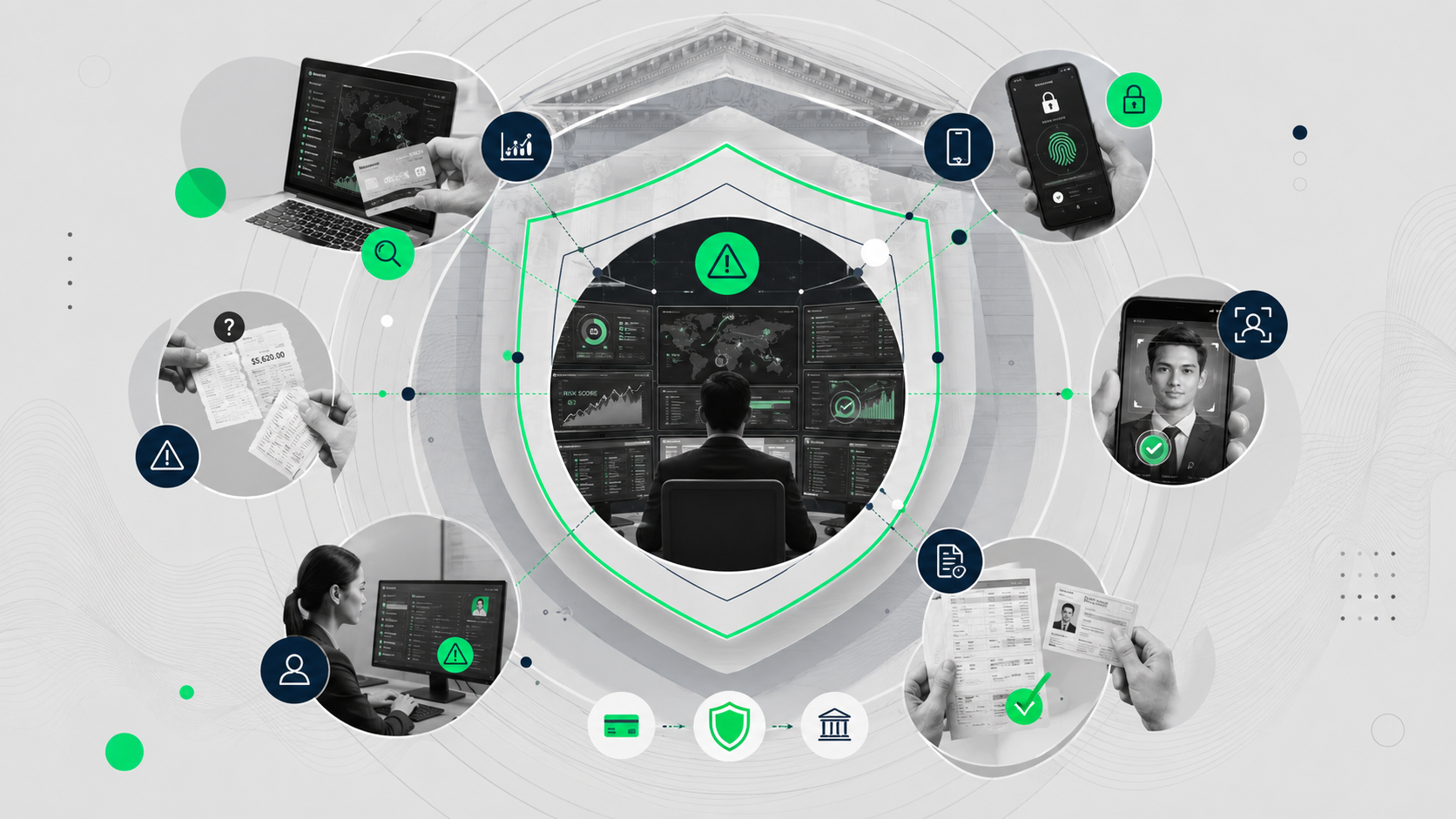
A fraud detection system for banks is no longer a back-office compliance checkbox. It is a strategic priority that determines whether a financial institution can protect its customers, its reputation, and its bottom line. With 97% of businesses reporting account takeover attempts in 2024, banking fraud has evolved far beyond stolen passwords and forged checks.
The threat landscape now includes AI-generated deepfakes, synthetic identities assembled from stolen data, and device-level spoofing that bypasses traditional security layers. For banks operating in high-growth digital markets like Indonesia, the question is no longer whether fraud will happen. The question is whether existing defenses can keep pace with attackers who are moving faster than ever.
Why Do Banks Need a Multi-Layered Fraud Detection System?
Traditional banking fraud prevention relied on a relatively simple model: verify a customer's identity at onboarding, then monitor transactions for anomalies. That approach worked when fraud was manual and slow. It does not work when attackers can generate convincing fake faces in minutes or forge identity documents at scale.
Document forgeries alone surged 244% year over year in Indonesia, according to VIDA's Indonesia Fraud Report 2025. Deepfake attacks grew by 1,550% between 2022 and 2023. These are not marginal increases. They represent a fundamental shift in how fraud operates, and they demand a fundamentally different response.
A single-layer defense, whether it is password authentication, SMS OTP, or basic document checks, creates a single point of failure. Once an attacker clears that one hurdle, nothing else stands in the way. A multi-layered fraud detection system for banks addresses this by creating overlapping zones of verification that an attacker must defeat simultaneously.
What Are the Key Threats Facing Banks Today?
Deepfakes and Synthetic Biometrics
The most alarming development in banking fraud is the weaponization of AI-generated biometrics. Attackers use cheap, accessible AI tools to create realistic face videos, voice clones, and even live deepfake streams that can fool basic liveness detection. A single deepfake-enabled scam in Hong Kong resulted in losses of $25 million, underscoring the scale of the problem.
Gartner predicts that by 2026, 30% of enterprises will consider identity verification solutions inadequate in isolation due to AI-generated deepfakes. For banks, this means that facial recognition alone, without advanced liveness detection and deepfake shielding, is becoming a liability rather than a safeguard.
Account Takeover at Scale
Account takeover (ATO) attacks have become the most pervasive threat to banking customers. The 97% incidence rate reported across businesses in 2024 reflects an ecosystem where stolen credentials, SIM swaps, and session hijacking are industrialized. Attackers do not need sophisticated tools when credential databases are readily available on dark web marketplaces.
The downstream impact is severe. When customers lose money to scams, as 23% of Indonesian consumers did in 2024, trust erodes. And when onboarding processes become burdensome in response to fraud, abandonment rates climb. Banks that saw a 39% increase in onboarding abandonment learned that friction is not the same as security.
Document Forgery and Synthetic Identities
The 244% surge in document forgeries signals that identity document verification must go beyond surface-level OCR. Attackers now create synthetic identities by combining real data fragments, such as a legitimate national ID number paired with a fabricated name and AI-generated photo, into packages that pass basic automated checks.
These synthetic identities can be used to open accounts, access credit, and launder funds before anyone realizes the "customer" never existed. By the time the fraud is detected, the damage is done and the attacker has moved on.
What Should a Modern Banking Fraud Detection System Include?
Biometric Verification with Deepfake Defense
The first layer must establish that the person presenting themselves is real, present, and matches their claimed identity. This requires liveness detection capable of distinguishing a live human face from a photograph, video replay, or deepfake. Advanced systems analyze micro-expressions, skin texture, and depth cues that synthetic media cannot yet replicate convincingly.
Beyond liveness, face matching cross-references the captured biometric against the photo on a verified identity document. This two-step process, proving both liveness and identity match, closes the gap that deepfakes exploit.
Device and Environment Intelligence
Fraud does not happen in a vacuum. It happens on a specific device, connected through a specific network, in a specific location. Device intelligence adds a critical layer by examining the environment from which an authentication attempt originates.
This means detecting emulators (virtual devices that mimic real phones), VPN usage designed to mask geographic location, and fake GPS signals intended to spoof physical presence. An attacker using an emulator to simulate a device in Jakarta while actually operating from overseas triggers a risk signal that biometrics alone would miss.
Document Verification Beyond OCR
Optical character recognition extracts text from identity documents, but extraction is not verification. Modern document verification analyzes structural elements of the document itself: security features, font consistency, microprinting, and layout patterns that differ between genuine and forged documents.
When combined with database cross-referencing, document verification can confirm that the data on a presented ID matches records held by issuing authorities. This transforms document checks from a cosmetic step into a substantive barrier against forgery.
Behavioral and Transactional Monitoring
Even after onboarding, continuous monitoring detects patterns that suggest an account has been compromised. Unusual login times, sudden changes in transaction patterns, and access from unfamiliar devices all generate risk scores that can trigger step-up authentication or temporary account locks.
This ongoing vigilance is what separates a robust fraud detection system for banks from a one-time verification checkpoint.
How Does Regulatory Pressure Shape Fraud Detection?
Indonesia's POJK 12/2024 regulation introduced a four-pillar anti-fraud framework that mandates financial institutions adopt comprehensive, risk-based approaches to fraud prevention. This regulatory shift reflects a broader global trend: regulators are no longer satisfied with reactive fraud management. They expect proactive, technology-driven defenses.
For banks, compliance is not optional. But compliance alone does not equal security. The most effective institutions treat regulatory requirements as a floor, not a ceiling, building systems that exceed minimum standards because the threat environment demands it.
How Does VIDA Approach Banking Fraud Prevention?
VIDA addresses the multi-layered nature of modern banking fraud through a unified platform that tackles three fraud vectors simultaneously: fake biometrics, fake devices, and fake identities.
VIDA's Deepfake Shield provides real-time detection of AI-generated facial media, neutralizing one of the fastest-growing attack vectors before it reaches the verification pipeline. Liveness detection confirms that a real person is present, while face matching validates their identity against verified documents.
The ID Fraud Shield adds device intelligence to the equation, detecting emulators, VPN usage, and GPS spoofing that signal fraudulent intent. Document verification with advanced OCR and structural analysis catches forgeries that basic systems miss.
What makes this approach distinctive is the unified SDK that runs these checks in parallel rather than sequentially. Banks do not need to integrate separate tools for each fraud vector. The system evaluates biometric, device, and document signals simultaneously, reducing both latency and the gaps that attackers exploit between sequential checks.
For banks navigating the intersection of growing fraud threats and rising customer expectations, a fraud detection system for banks must deliver security without unnecessary friction. The goal is not to make banking harder. It is to make fraud harder.
Frequently Asked Questions
What is a fraud detection system for banks?
A fraud detection system for banks is a technology platform that identifies and prevents fraudulent activities across the customer lifecycle, from onboarding and identity verification through ongoing transaction monitoring and account protection.
Why is multi-layered fraud detection important for banks?
Single-layer defenses create single points of failure. Multi-layered systems verify identity, device integrity, and document authenticity simultaneously, forcing attackers to defeat multiple barriers at once rather than bypassing a single check.
How do deepfakes threaten banking security?
Deepfakes use AI to generate realistic facial images and videos that can fool basic biometric verification. They enable attackers to impersonate real customers or create synthetic identities for fraudulent account opening and transactions.
What is device intelligence in fraud detection?
Device intelligence analyzes the technical environment from which an authentication attempt originates, detecting emulators, VPN masking, fake GPS, and other indicators that the request is coming from a spoofed or fraudulent source.
How does POJK 12/2024 affect banking fraud prevention?
POJK 12/2024 introduces a four-pillar anti-fraud framework requiring Indonesian financial institutions to implement comprehensive, risk-based fraud prevention strategies that go beyond reactive monitoring.
Sources
- VIDA, Indonesia Fraud Report 2025
- VIDA, What The Fake! Deepfake Report
- Gartner, Predictions for Identity Verification and Deepfakes, 2026
- OJK, POJK 12/2024 Anti-Fraud Framework
.png)