Business activities are moving faster than ever (and increasingly going digital) which makes billing processes more demanding and time-sensitive. One key document that ensures transactions are clearly recorded and properly tracked is the invoice.
Despite its importance, invoice management also comes with risks. Handling invoices manually, whether by relying on outdated templates, separate spreadsheets, or repeated manual entry, often leads to administrative errors.
This is why many businesses are turning to invoice applications. With an invoice app, the process of creating, sending, and recording invoices becomes more structured and efficient. This article will walk you through everything you need to know about invoice applications, including common examples and key considerations before choosing one.
Baca juga: Contoh Surat Perjanjian Kerja Sama serta Tips Membuatnya
What Is an Invoice Application and What Does It Do?
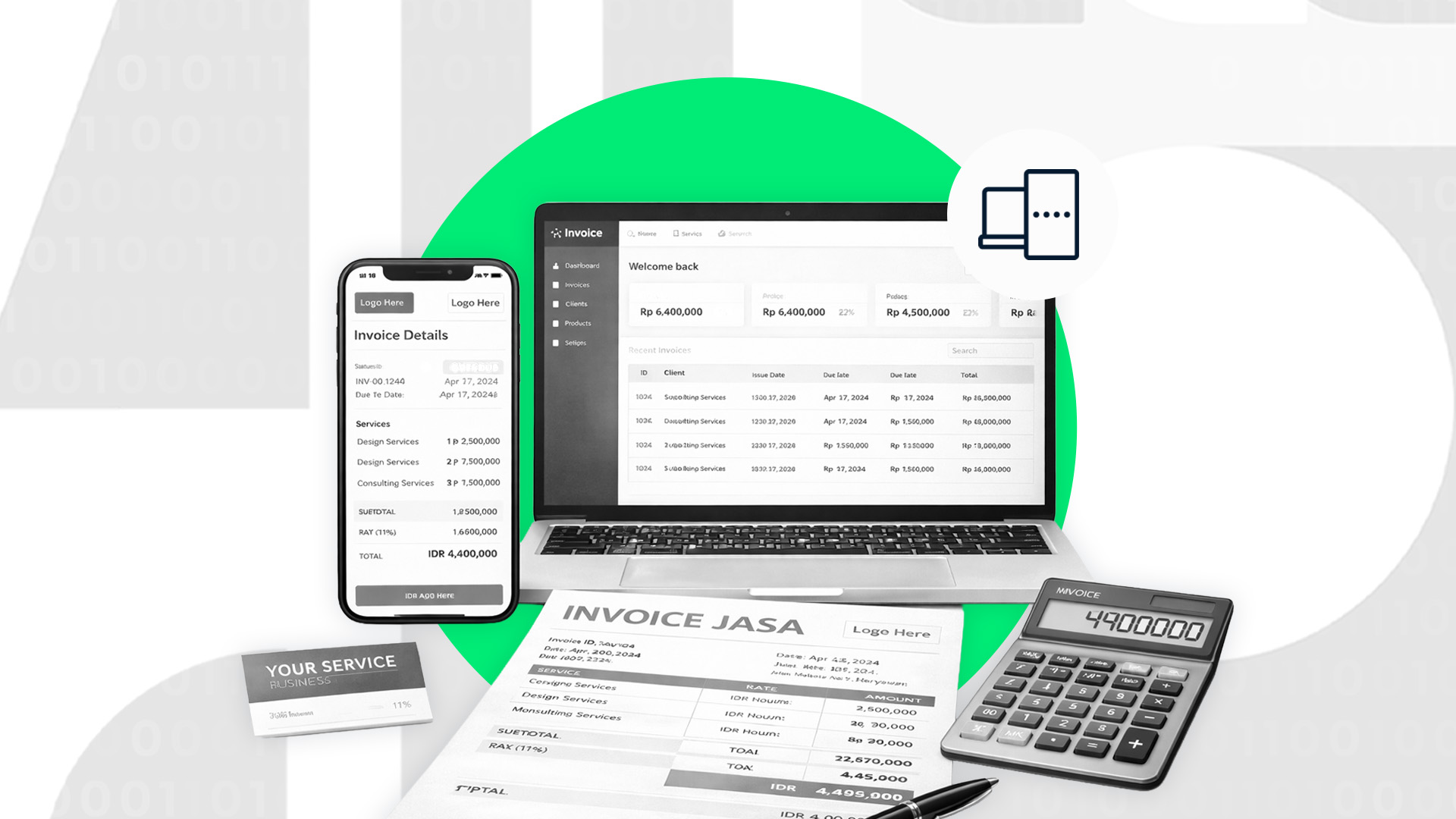
An invoice application is a software tool or digital platform used to create, manage, and send invoices electronically. So, how is it different from manual invoicing? Invoice applications help standardize invoice formats, automatically generate invoice numbers, and keep transaction data neatly organized within a single system.
These applications simplify invoice creation by offering ready-to-use templates that can be customized as needed. Users no longer have to build invoices from scratch every time they need to bill a client.
Invoice numbering can also be managed systematically, an important factor for tracking payments, reconciling transactions, and supporting audit requirements. Invoices are stored digitally, making them easy to retrieve whenever needed.
Many invoice applications also come with features such as payment status tracking, due date reminders, and basic reporting. With these capabilities, invoice applications play a key role in supporting cash flow management and overall business administration.
Examples of Free Invoice Applications Commonly Used
If you’re just getting started with invoice applications, it’s only natural to want to try them out first. Before committing to a paid solution, you can begin by exploring free invoice applications to see which features best suit your needs.
Today, there are many free invoice applications available that are easy to access. Each comes with its own strengths and limitations. Below are some popular examples of free invoice applications commonly used:
- Invoice Simple
This application is known for its clean and user-friendly interface. It’s well suited for quickly creating professional-looking invoices without complicated setup. - Wave Invoicing
Wave offers free, cloud-based invoicing features. You can create and send invoices online, as well as track payment statuses through a single dashboard. - Zoho Invoice (Free Plan)
Zoho Invoice provides a free plan with fairly comprehensive features, including professional invoice creation, client management, and automated payment reminders. - Invoice Generator (Web-based)
This platform allows users to generate invoices directly from a web browser without the need for registration. It’s ideal for quick and simple invoicing needs.
While free invoice applications can be a practical starting point, it’s important to note that some come with limitations, such as monthly invoice caps, locked advanced features, or restricted data export options.
Key Things to Consider When Using an Invoice Application
Before choosing and using an invoice application, there are several important aspects to consider to avoid potential issues down the line.
- Data Security
Invoices contain sensitive information such as client details, transaction values, and payment information. Make sure the invoice application has adequate security measures in place and does not misuse user data. - Document Validity
Invoices are often part of a broader set of official documents, including contracts and financial reports. It’s important to ensure that the invoices generated can be accounted for administratively and are legally defensible. - Invoice Number Management
A reliable invoice application should be able to generate invoice numbers automatically, consistently, and without duplication. Poor numbering practices can lead to confusion or accounting disputes. - Ease of Archiving and Access
Invoices should be easy to download, store, and retrieve when needed. Applications that offer centralized archiving systems are especially helpful in the long run. - Scalability for Business Growth
Free invoice applications can be a good starting point, but make sure the system remains relevant as transaction volumes increase or business needs evolve.
The General Workflow of Using an Invoice Application
As with any business process, invoicing follows a specific workflow to ensure operations run smoothly, and invoice applications are no exception.
In general, using an invoice application involves a fairly straightforward process. First, users enter transaction details such as the client’s name, a description of the goods or services provided, and the billing amount. The system then generates the invoice based on a predefined template.
Next, the invoice is automatically assigned a number according to the system’s settings. Once finalized, the invoice can be sent to the client via email or through the platform itself. Finally, users can monitor payment status and store the invoice as part of their digital records.
This structured workflow helps minimize manual errors and significantly speeds up the billing process.
Baca juga: Contoh Surat Perjanjian Kesepakatan serta Cara Membuatnya
The Importance of Invoice Validity in the Digital Era
As digital invoicing becomes more widely adopted, it’s important for professionals and businesses to understand the significance of document validity. An invoice is not just a billing document, it is also proof of a transaction that may be used for audits, tax reporting, or dispute resolution.
For this reason, many businesses are strengthening their digital invoices with more robust validation mechanisms, such as digital signatures and electronic stamp duty. Electronically validated documents are better protected against forgery and unauthorized changes.
In Indonesia, electronic document validation can be carried out through officially licensed electronic certification providers. One such solution is VIDA, which offers digital signature and electronic stamp services based on verified digital identities.
.png)