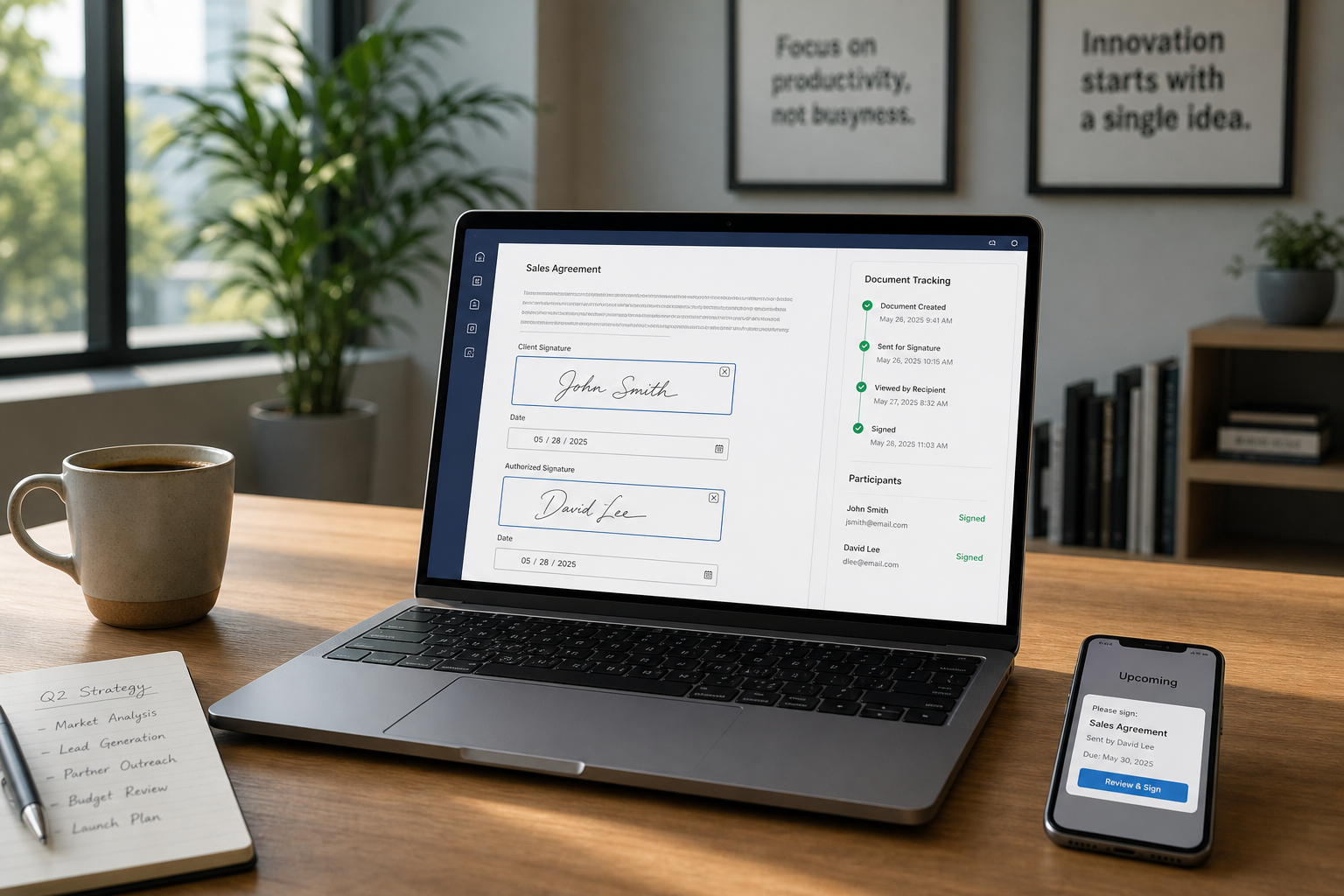
As digital technology grows, our need for in-person interactions keeps shrinking. Think about it: we can open a bank account from a smartphone, buy items from overseas without leaving our room, and even sign important documents straight from bed.
Every transaction, agreement, and digital signature now demands not only speed—but also strong security, verified identities, and compliance with regulations. When we talk about signatures, they’re no longer just a formality. Today, they’re a crucial part of cybersecurity itself.
So why does switching to digital signatures matter for cybersecurity? And how do digital signatures strengthen overall data protection? Let’s explore.
Wet Ink Signatures Are Easy to Forge
Document forgery is becoming increasingly common. According to VIDA’s report, 96% of businesses in Indonesia have experienced document or signature forgery. In one police raid in Jember, authorities uncovered a syndicate printing fake government documents—from vehicle registrations to land certificates.
Even the Indonesian Police stated that they handle an average of seven cases of authentic document forgery every day. Not only are these cases increasing—they’re getting more sophisticated. Scammers now use AI and deepfake technology, with AI-driven financial fraud in Indonesia rising 1,550% since 2022.
This makes one thing clear: traditional wet signatures are no longer secure enough for today’s threats. Here are the weaknesses of wet ink signatures:
1. Signatures Can Be Easily Copied
Someone can trace or copy your signature from another document and use it to approve contracts, transactions, or purchases without your knowledge.
2. Others Can Impersonate You
A person can pretend to be you, sign documents under your name, and get away with it—because wet signatures provide no upfront identity verification.
3. No Record of How the Signature Was Made
The only way to know when a physical document was signed is to witness it in person.
Outside that, there’s no digital evidence—no timestamps, no device info, nothing.
4. Identity of the Signer Is Never Verified
Many systems accept signatures without confirming whether the signer is truly authorized.
Unless someone physically witnesses the signing, there’s no valid proof of who signed the document.
These vulnerabilities create major cybersecurity risks for documents and digital workflows.
Cybersecurity Threats to Documents
The weaknesses of wet signatures lead to several cybersecurity threats to documents and electronic systems. Here are the most common risks:
1. Signature Forgery
Someone copies or imitates another person’s signature to approve important documents such as contracts, power of attorney, or legal agreements.
Impact: unauthorized business decisions, financial losses, legal disputes, and reputational damage.
2. Impersonation / Spoofing
Scammers pretend to be someone important (like a company executive) and issue commands or approve documents without undergoing any identity verification.
Example: An employee receives an email that seems to come from a director asking to sign a fund transfer document—but it’s actually from a hacker.
Impact: loss of assets, data breaches, and damaged trust with partners.
3. Signatures Without Audit Trail
Documents signed manually—printed, signed, then scanned—have no reliable record of:
when they were signed, who signed them, and what device was used.
Investigations become difficult, disputes are harder to resolve, and documents can be manipulated without detection.
Digital Signatures for Document Security
To address these challenges, VIDA introduced VIDA Sign for Enterprise—a digital signature solution designed specifically for highly regulated industries such as banking, insurance, multifinance, and online lending. The solution is built on three pillars: security, compliance, and scalability.
Here are the types of digital signatures included in VIDA Sign for Enterprise:
1. VIDA Sign Platform & Open API
The VIDA Sign Platform enables companies to manage digital signing workflows centrally using an open API (Open API). Ideal for organizations with high document volume and complex automation needs.
Key advantages:
-
Suitable for approval flows involving multiple signers
-
Supports serial and parallel signing
-
Complete webhook & audit trail
-
Flexible integration with internal systems (CRM, ERP, claims, e-forms, etc.)
Example use case:
An insurance company integrates the Open API into its e-Policy system so customers can sign policies legally and securely.
2. Direct Sign
Direct Sign allows users to sign documents directly within a company’s application or website through an embedded iFrame. Signers never leave the page, reducing risk and improving user experience.
Key advantages:
-
Fully embedded signing experience
-
Supports various authentication methods (FaceAuth, OTP, etc.)
-
Ideal for fast but secure one-session signing
Example use case:
A banking customer signs onboarding documents without leaving the mobile banking app.
3. POASign (Power of Attorney Sign)
POASign enables legally authorized representatives of an organization to sign documents on behalf of their institution. It's perfect for formal legal scenarios such as contracts, partnership agreements, and corporate documents.
Key advantages:
-
Ensures legal validity for signing on behalf of institutions
-
Linked to the organization’s structure within VIDA’s system
-
Suitable for businesses with hierarchical authorization (legal, finance, notary teams)
Example use case:
A company’s legal manager signs a partnership contract digitally on behalf of the organization.
Building trust isn’t just about fast service—it requires strong cybersecurity and regulatory compliance. With VIDA Sign for Enterprise, organizations can safeguard their documents, verify every signer’s identity, and ensure full legal alignment.
Contact https://vida.id/en/sales for further information.
.png)