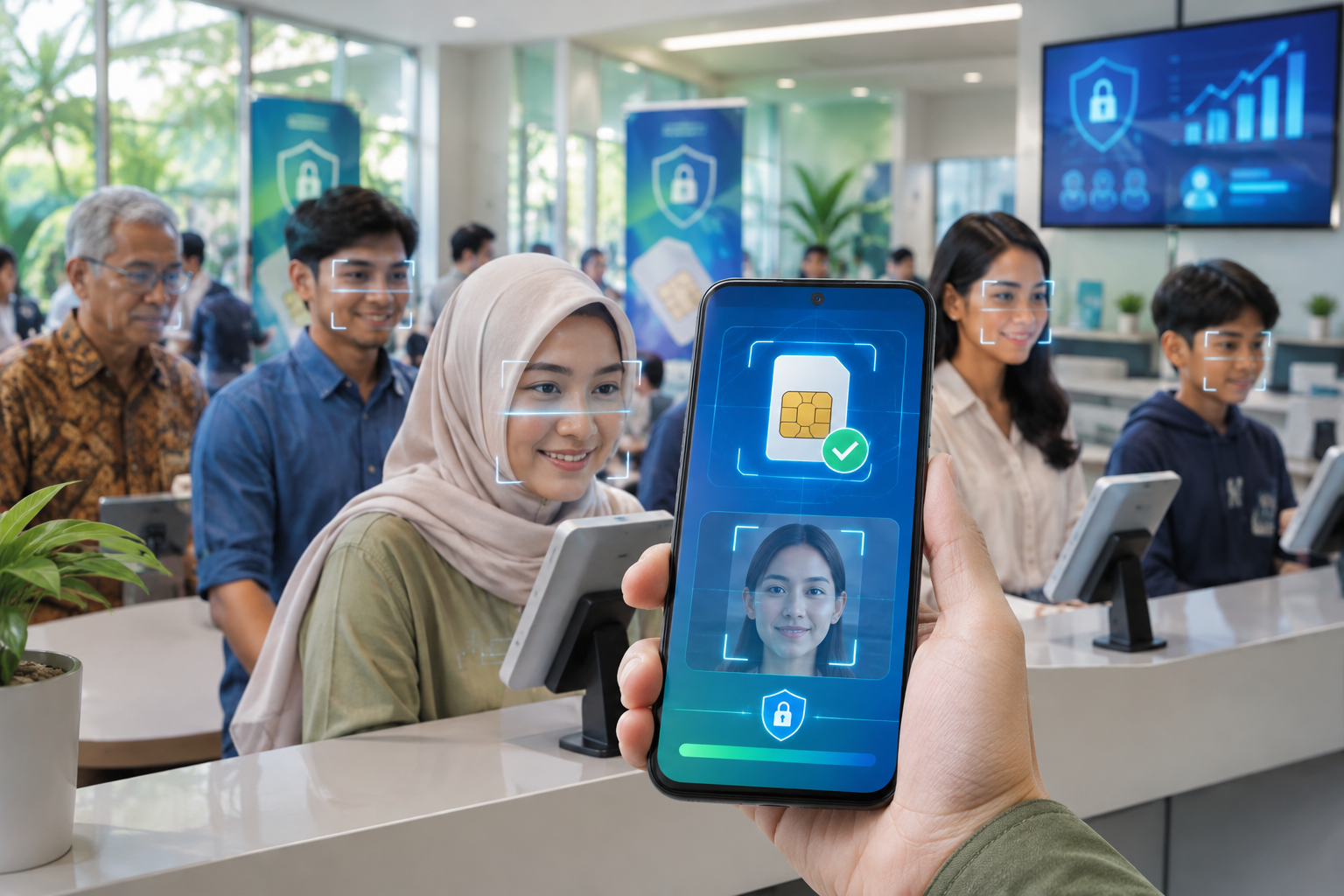
A mobile phone number is more than a communication tool. It has become an important gateway to digital services, from banking and e-commerce to healthcare and public services. As more services rely on mobile numbers for customer access and authentication, it’s important to ensure that each number is registered under a legitimate identity.
In Indonesia, this is driving a shift in how users register SIM cards. Under the Ministry of Communication and Digital Affairs Regulation No. 7 of 2026, new SIM card registrations by Indonesian citizens must include biometric facial verification, adding another layer of identity validation to the registration process.
This shift also highlights the growing role of digital identity infrastructure in the telecommunications industry. VIDA's biometric verification technology is helping telecommunications companies strengthen customer identity checks during SIM registration by reducing the risk of phone numbers being registered with stolen identities or deepfakes.
Why Does SIM Card Registration Need Biometric Verification?
Traditionally, SIM card registration relies National Identification Number (NIK) of KTP. However, identity data alone does not always establish that the person submitting the information is its legitimate owner, especially in the era when fake IDs are widespread.
Stolen personal information can be misused to register mobile numbers without the knowledge of the actual identity owner. These numbers may then be used for fraudulent calls, phishing messages, and other forms of digital crime.
Biometric verification adds a layer of assurance by checking whether the person registering a SIM card matches the identity information provided. It makes identity verification more than a matter of submitting personal data. The individual must also demonstrate that they are the person associated with that identity.
For telecommunications operators, this strengthens the foundation of customer registration and helps reduce opportunities for identity misuse.
How Does Biometric Verification Work in SIM Card Registration?
VIDA’s biometric verification typically combines two important processes: facial matching and liveness detection.
1. Face Matching
Facial matching compares a customer's face with the facial data associated with their identity record. This helps verify whether the person registering the SIM card is the legitimate owner of the identity being used.
2. Liveness Detection
Facial matching alone is not enough if someone attempts to use a photograph, video recording, or digitally manipulated image to impersonate another person.
Liveness detection adds another layer of security by assessing whether the face presented during verification belongs to a person who is physically present, rather than a static image or manipulated representation.
Together, these technologies help strengthen the registration process by verifying both the identity being claimed and the authenticity of the person presenting it.
Bringing Biometric Verification into Indonesia's Telecommunications Industry
This is where digital identity infrastructure plays an important role. VIDA's biometric verification supports SIM card registration within Indonesia's telecommunications industry. Its technology includes Color Flash liveness detection, which adds a layer of protection against attempts to bypass facial verification using photographs, video recordings, and digitally manipulated facial representations.
The application of biometric verification in telecommunications demonstrates how digital identity technology can support security requirements in large-scale, everyday services. Rather than relying solely on identity information submitted during registration, operators can strengthen the process with facial verification and liveness detection.
It also reflects a broader shift in how digital identity infrastructure is being applied across industries, from financial services to telecommunications, where establishing trust in a user's identity is essential.
Can Biometric SIM Registration Prevent All Types of Digital Fraud?
Biometric registration is an important step in reducing identity misuse, but it does not eliminate every form of digital fraud.
Its primary role is to strengthen identity verification when a SIM card is registered. Once a number becomes active, users may still face threats such as:
- Social engineering: Fraudsters impersonate legitimate institutions to trick individuals into revealing passwords, OTPs, or personal information.
- SIM swapping: Criminals attempt to take control of someone else's mobile number to intercept calls and authentication messages.
- Malware: Malicious software can compromise devices and expose sensitive information, including authentication credentials.
These threats operate in different ways and cannot be addressed through SIM registration alone. Protecting digital identities requires security measures that extend beyond the initial registration process.
This includes verifying the person accessing a service, assessing whether the device being used can be trusted, and checking the authenticity of identity documents when necessary.
The adoption of biometric verification in SIM registration reflects a broader need for stronger digital identity assurance. For businesses, the challenge is not only to verify identities at the point of registration, but also to maintain trust throughout subsequent digital interactions.
Through its digital identity infrastructure, VIDA supports this broader approach with capabilities spanning biometric verification, document verification, and device intelligence.