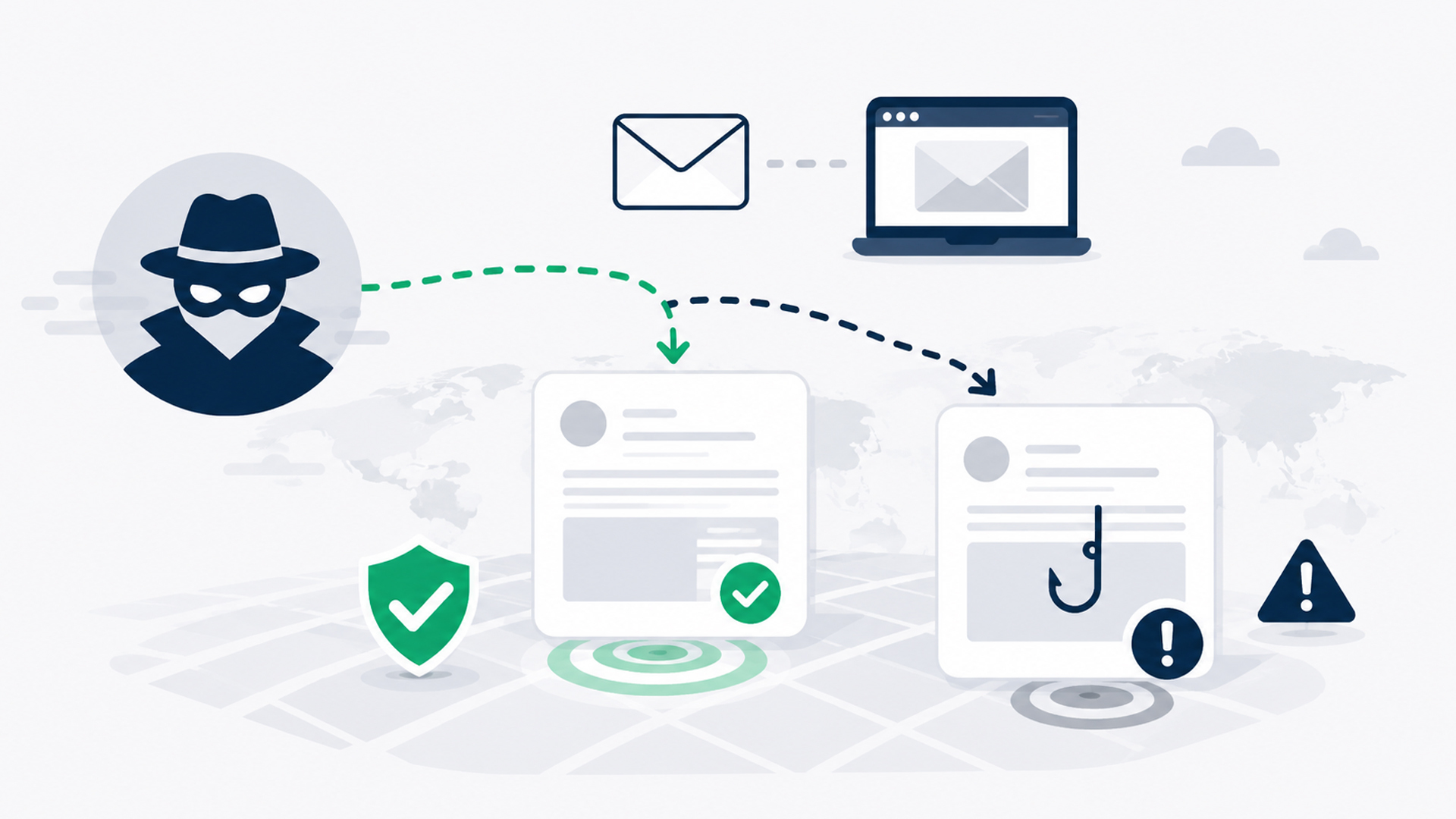
Email remains one of the most important communication channels for businesses and individuals. Whether for account registration, password recovery, financial transactions, or internal communication, email plays a critical role in everyday digital interactions.
Unfortunately, it is also one of the most exploited channels by cybercriminals. Through fake emails, fraudsters can impersonate trusted organizations, steal sensitive information, and trick victims into taking actions that compromise their accounts or finances.
As phishing attacks become more sophisticated and AI-powered scams continue to evolve, understanding how fake emails work has become essential for both businesses and consumers.
What Is a Fake Email?
A fake email is an email message that appears to come from a legitimate sender but is actually created by a fraudster. The objective may vary depending on the attack. Some fake emails are designed to steal login credentials, while others attempt to collect personal information, distribute malware, or initiate fraudulent financial transactions.
In many cases, attackers impersonate:
- Banks and financial institutions
- Government agencies
- E-commerce platforms
- Business partners
- Company executives
- Customer support teams
Because these emails often resemble genuine communications, victims may not immediately recognize the threat.
How Fake Email Attacks Work
Most fake email attacks rely on social engineering rather than technical vulnerabilities. The attacker first creates an email that appears trustworthy. This may include official logos, company branding, familiar language, and even sender names that look legitimate. The email typically encourages the recipient to take immediate action, such as:
- Resetting a password
- Verifying an account
- Updating payment information
- Reviewing an invoice
- Downloading an attachment
- Sharing a verification code
Once the victim responds, the attacker gains access to sensitive information that can be used for fraud.
Common Types of Fake Email Scams
Phishing Emails
Phishing is one of the most common forms of email fraud. Victims are directed to fake websites designed to capture usernames, passwords, and other sensitive information.
Email Spoofing
In email spoofing attacks, fraudsters manipulate sender information so messages appear to originate from trusted organizations.
Business Email Compromise (BEC)
Attackers impersonate company executives, vendors, or finance teams to request payments, wire transfers, or confidential information.
Malware Delivery
Some fake emails contain malicious attachments or links that install malware on a victim's device.
These attacks can result in data theft, financial loss, and unauthorized access to business systems.
Why Fake Emails Are Becoming More Convincing
Traditional phishing emails were often easy to spot because of poor grammar, suspicious links, or obvious mistakes. Today, fraudsters have access to far more sophisticated tools. Information obtained from data breaches, social media profiles, and public sources allows attackers to create highly personalized messages.
Artificial intelligence is also making email scams more convincing. AI can generate professional-looking content, imitate communication styles, and even support larger fraud schemes involving voice cloning and digital impersonation. As a result, fake emails are no longer just a cybersecurity issue, they have become part of broader identity fraud and account takeover attacks.
Why Businesses Need Stronger Identity Verification
Because email itself can be spoofed, businesses should not rely solely on email communications to verify user identity or authorize sensitive actions.
Modern fraud prevention strategies increasingly combine:
- Multi-factor authentication (MFA)
- Biometric verification
- Device intelligence
- Behavioral analysis
- Risk-based authentication
These additional security layers help ensure that the person behind a request is legitimate, even if communication channels have been compromised.
Solutions such as ID FraudShield from VIDA help organizations identify suspicious signals beyond email, including device manipulation, risky behavior patterns, VPN usage, emulator activity, and other indicators commonly associated with fraud attempts.
As fake email attacks continue to evolve, combining identity verification with fraud intelligence is becoming increasingly important for protecting both businesses and users.