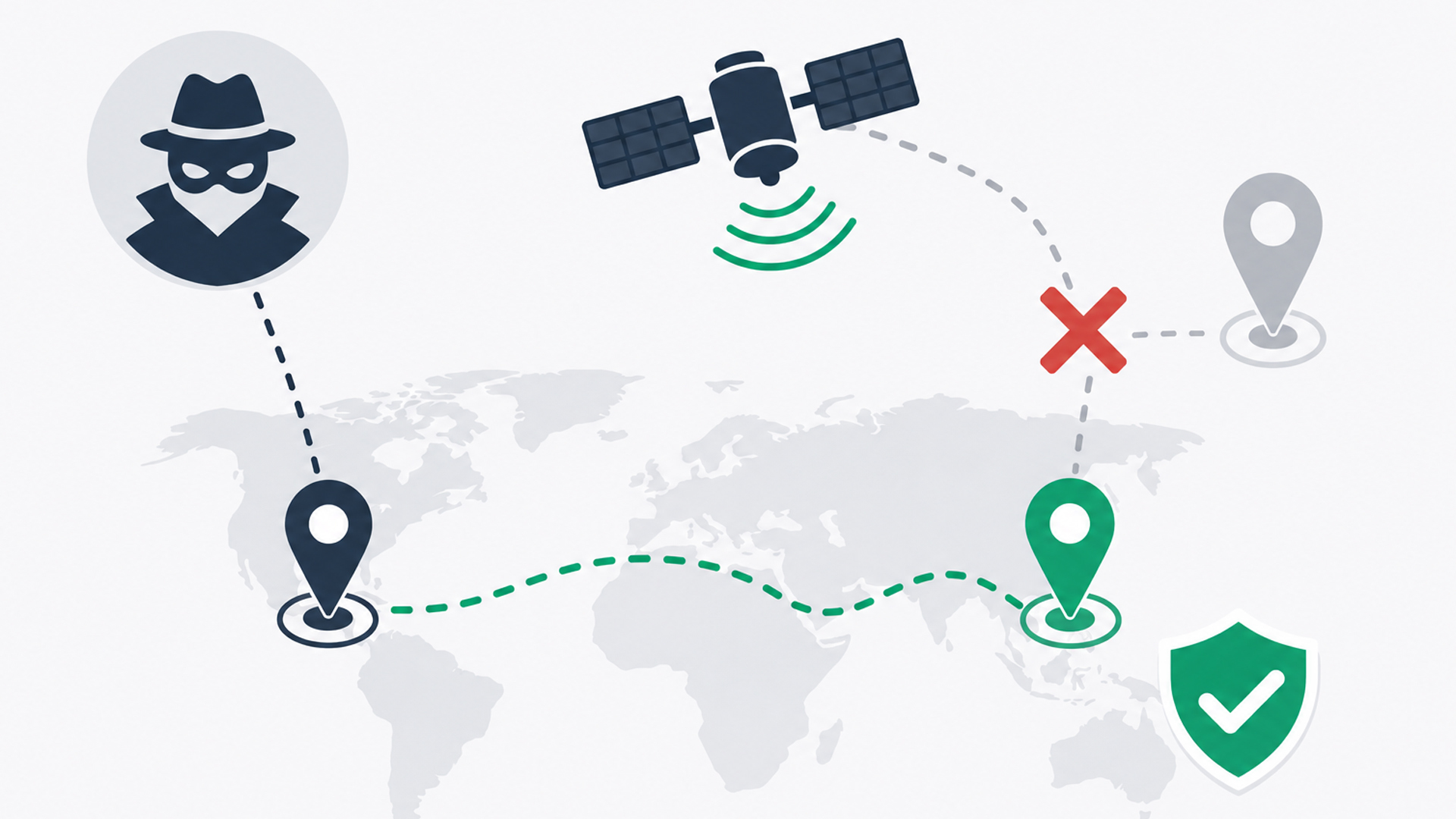
Location data has become an important trust signal in today's digital ecosystem. Financial institutions, e-commerce platforms, gaming companies, and online services often use device location to assess risk, detect suspicious activity, and improve user experiences.
However, location information is not always reliable. Through a technique known as Fake GPS or GPS spoofing, users can manipulate their device's reported location, making it appear as though they are somewhere else entirely.
While some use location spoofing for testing or privacy purposes, fraudsters often leverage it to disguise suspicious behavior and evade security controls. As digital fraud becomes more sophisticated, businesses need to understand why location manipulation is increasingly becoming a fraud risk.
What Is Fake GPS?
Fake GPS refers to the practice of altering a device's location information so that apps and online services receive false GPS coordinates. Using specialized software, a device physically located in one place can appear to be operating from another city, region, or even country.
This process is commonly known as GPS spoofing or location spoofing. Because many applications rely on location signals to make security decisions, manipulated GPS data can create blind spots in fraud detection systems.
Why Do Fraudsters Use Fake GPS?
For cybercriminals, hiding their true location can help make fraudulent activity appear legitimate. A fraudster may use GPS spoofing to:
- Create accounts from regions where access is restricted
- Conceal suspicious login attempts
- Circumvent geographic security controls
- Manipulate location-based rewards or services
- Avoid triggering risk detection systems
In many cases, fake GPS is not used alone. It is often combined with other fraud techniques to create a more convincing digital identity.
How GPS Spoofing Is Used in Fraud Schemes
Modern fraud operations frequently rely on multiple layers of deception. A fraudster may combine fake GPS with:
VPNs and Proxy Networks
These tools help conceal the user's real IP address while reinforcing the appearance of a different location.
Device Emulators
Attackers often use emulators to create large numbers of accounts without relying on physical devices.
Synthetic Identities
Fake or manipulated identities can be paired with spoofed locations to make onboarding attempts appear legitimate.
Account Takeover Attacks
Location spoofing can be used to disguise unauthorized access to existing user accounts.
When these techniques are used together, traditional location checks may no longer provide sufficient protection.
Why Location Data Alone Is Not Enough
Many organizations still rely on location as part of their risk assessment process. However, a device appearing to log in from a trusted location does not necessarily mean the activity is legitimate. For example, a user may appear to be accessing a service from London, but behind the scenes:
- GPS coordinates have been manipulated
- A VPN is masking the real network location
- The session is running on an emulator
- Automated scripts are controlling activity
Viewed individually, these signals may not seem suspicious. Together, they can indicate a high-risk fraud attempt. This is why modern fraud prevention strategies increasingly look beyond location data and evaluate multiple device and behavioral signals simultaneously.
Detecting Fake GPS Through Device Intelligence
As fraud tactics evolve, businesses need better visibility into the devices accessing their platforms. Rather than relying solely on GPS information, advanced fraud detection solutions analyze indicators such as:
- GPS spoofing attempts
- Emulator usage
- Rooted or jailbroken devices
- VPN and proxy connections
- Remote access tools
- Behavioral anomalies
By combining these signals, organizations can identify suspicious sessions more accurately and stop fraud before it results in financial loss. Solutions such as ID Fraud Shield from VIDA help businesses detect device-based fraud indicators in real time, including GPS spoofing, emulator activity, VPN usage, and other forms of device manipulation commonly used to bypass security controls.
As digital fraud becomes increasingly sophisticated, understanding and detecting fake GPS activity is becoming an essential part of building stronger fraud prevention strategies.
.png)