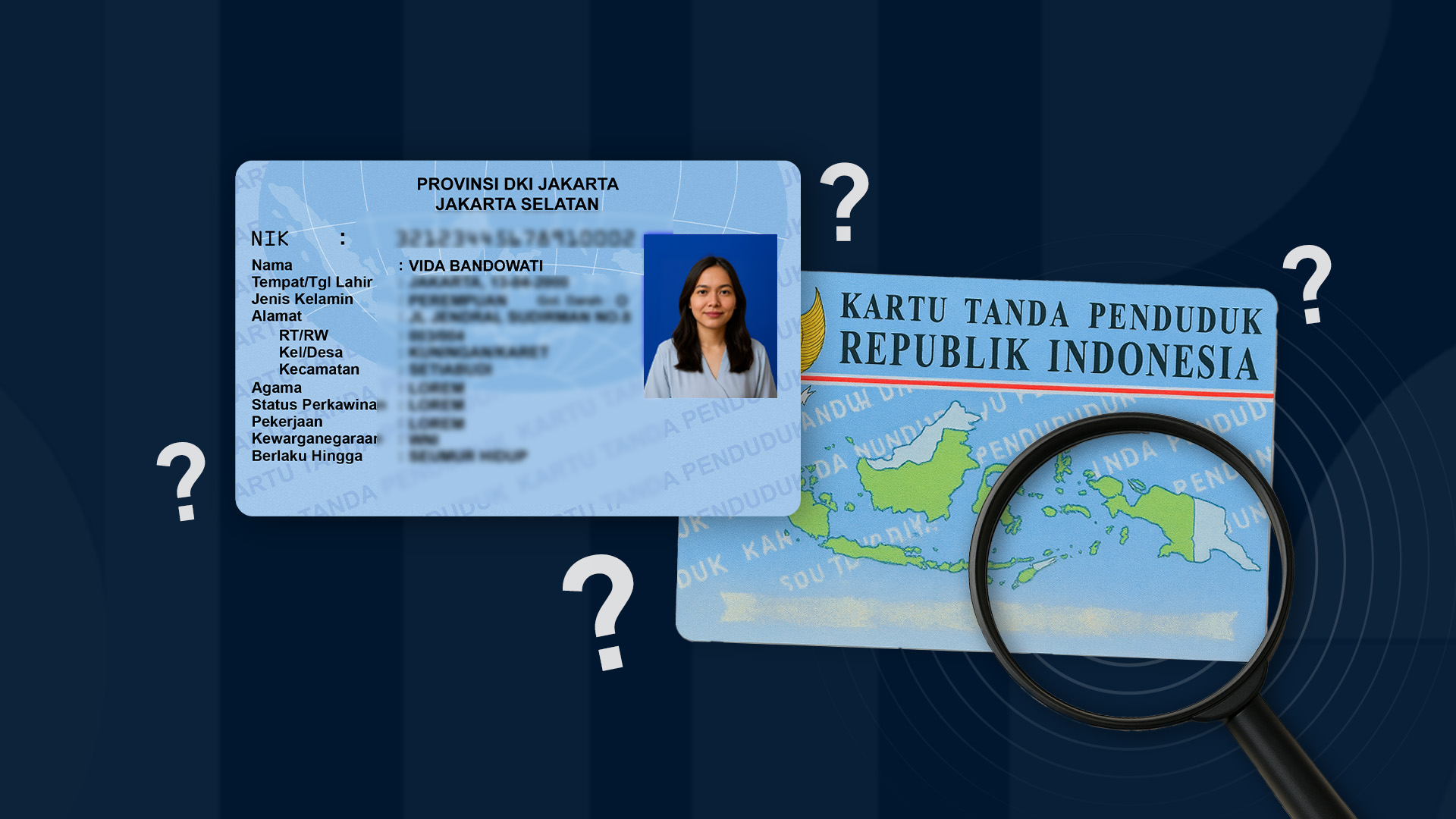
Why does everything seem to require your ID card (KTP)? And why do we always have to carry it everywhere? Because your KTP is more than just a formal identity, it’s the key that unlocks countless services in your life.
From banking, finance, healthcare, travel, to online shopping—your KTP is used everywhere. But with such frequent usage comes growing risk: identity fraud using fake KTPs.
According to Antara News, the police uncovered a syndicate buying thousands of NIK and family card numbers from the dark web for only Rp 200 per record. These identities were used to register fake SIM cards, which were later used to commit fraud—such as opening loan and e-wallet accounts without the victims knowing.
There are many more risks you need to be aware of. Let’s break down the types of fake KTP scams and how to avoid them.
Common Fake KTP Fraud Schemes
Criminals continually come up with new ways to exploit KTP data. Here are the most widespread methods:
1. Fake Digital ID (IKD) Activation
Scammers pretend to be officials from Dukcapil or other identity agencies. They contact victims via WhatsApp, SMS, or email and ask for:
-
a photo of their KTP
-
NIK and family card numbers
-
a selfie
These details are then used to create fake digital IDs or register financial accounts without permission.
2. Online Loan Registration Using Fake KTPs
This is one of the most damaging schemes. Scammers use stolen or edited ID cards—sometimes enhanced with deepfake technology to fool facial verification—to apply for loans under someone else’s name.
The victim only finds out when the bills arrive.
3. Registering SIM Cards and Public Services with Stolen IDs
Fraudsters use illegally obtained personal data to activate SIM cards and register for public services such as BPJS.
Victims often don’t realize their identity is being used until the number is linked to a criminal case.
4. Fake Apps Claiming to Create Digital KTP
Many unofficial apps claim they can “make digital KTPs” by uploading a photo.
In reality, these apps are data-harvesting tools. Once scammers obtain the data, they use it to create fake IDs for fraudulent activities.
5. Using Fake KTPs for E-Commerce Accounts
Criminals register as fake couriers, merchants, or buyers using edited KTPs. This allows them to scam customers, sell illegal goods, or apply for paylater services.
6. Insider Data Theft
Some cases involve employees with access to identity databases. They may duplicate KTP photos, selfies holding KTP, even biometric details. These can then be sold or misused for fraud.
Signs of a Fake KTP
If you work in finance, insurance, HR, or any identity-driven industry, knowing how to spot fake IDs is essential. Here are the key warning signs:
1. Inconsistent Fonts and Print Quality
Fake KTPs often have irregular font sizes, mismatched typefaces, and sloppy alignment. Compare with a known authentic KTP if something seems off.
2. Blurry Photos or Edited Images
Fake KTPs may show pasted or low-resolution photos, overly bright or dark images, faces manipulated with AI or deepfake tools.
3. Data Doesn’t Match Dukcapil Records
One of the most reliable checks is to validate the NIK with Dukcapil. If the name, address, or number doesn’t match the official database, the ID is likely fake.
4. Non-Official Formats
Beware when someone submits scanned copies, photocopies, and cropped or low-resolution images. These often hide inconsistencies.
5. Unverifiable Landmarks
Official e-KTPs include physical and digital landmarks used for verification. If these landmarks cannot be validated through scanning tools, the ID is most likely counterfeit.
How to Protect Yourself from Fake KTP Fraud
Because data misuse in Indonesia is still widespread—and national data protections are not yet fully robust—your best defense is personal vigilance.
1. Don’t Share Your KTP Photo Carelessly
If someone asks for your KTP without a clear purpose, reject it. Even if they claim to be from an official institution, always verify their identity.
2. Avoid Sending KTP Over Random Channels
Do not send your KTP via WhatsApp, Telegram, or email to unknown parties. Only use secure, official apps with clear encryption policies.
3. Avoid “Digital KTP Maker” Apps
These apps are often scams designed to harvest your data.
Remember: The government does NOT provide a public app for making digital KTPs.
If it’s not from Dukcapil or an official PSrE partner, ignore it.
4. Be Careful When Granting App Permissions
If an app requests unnecessary access (camera, gallery, location, or documents), you should be cautious. Only grant permissions that make sense for the app’s function.
Technology That Helps Prevent Fake KTP Fraud
For businesses dealing with customer identity, KTP verification is crucial. If a submitted ID is fake or edited, the system must be able to reject it immediately. VIDA provides AI-powered document verification technology capable of analyzing:
-
image quality
-
signs of manipulation
-
authenticity of KTP landmarks
-
text structure and layout
-
lighting and consistency
How VIDA’s Document Verification Works:
-
Image Quality Check
The system ensures the uploaded KTP image is sharp and clear. If not, the user is prompted to submit a better photo. -
Forgery Detection
AI analyzes whether the ID card shows signs of digital editing, photocopying, or template manipulation. -
Landmark Validation
VIDA verifies holograms, layout accuracy, and other official KTP elements.
Fake KTPs can cause severe harm for individuals and businesses alike, especially in banking, fintech, insurance, and public services.
Protecting yourself starts with safeguarding your own data, while businesses must adopt strong identity and document verification systems.
.png)