Jakarta, October 1, 2026 – Artificial intelligence (AI) adoption across Indonesia’s fintech industry continues to expand. The Indonesia Fintech Association (AFTECH) Annual Members Survey 2025–2026 found that 84% of its members have adopted AI in their business processes. However, the growing use of AI also calls for stronger security systems to protect consumers, particularly against AI-powered fraud such as deepfakes, which are becoming increasingly difficult to detect.
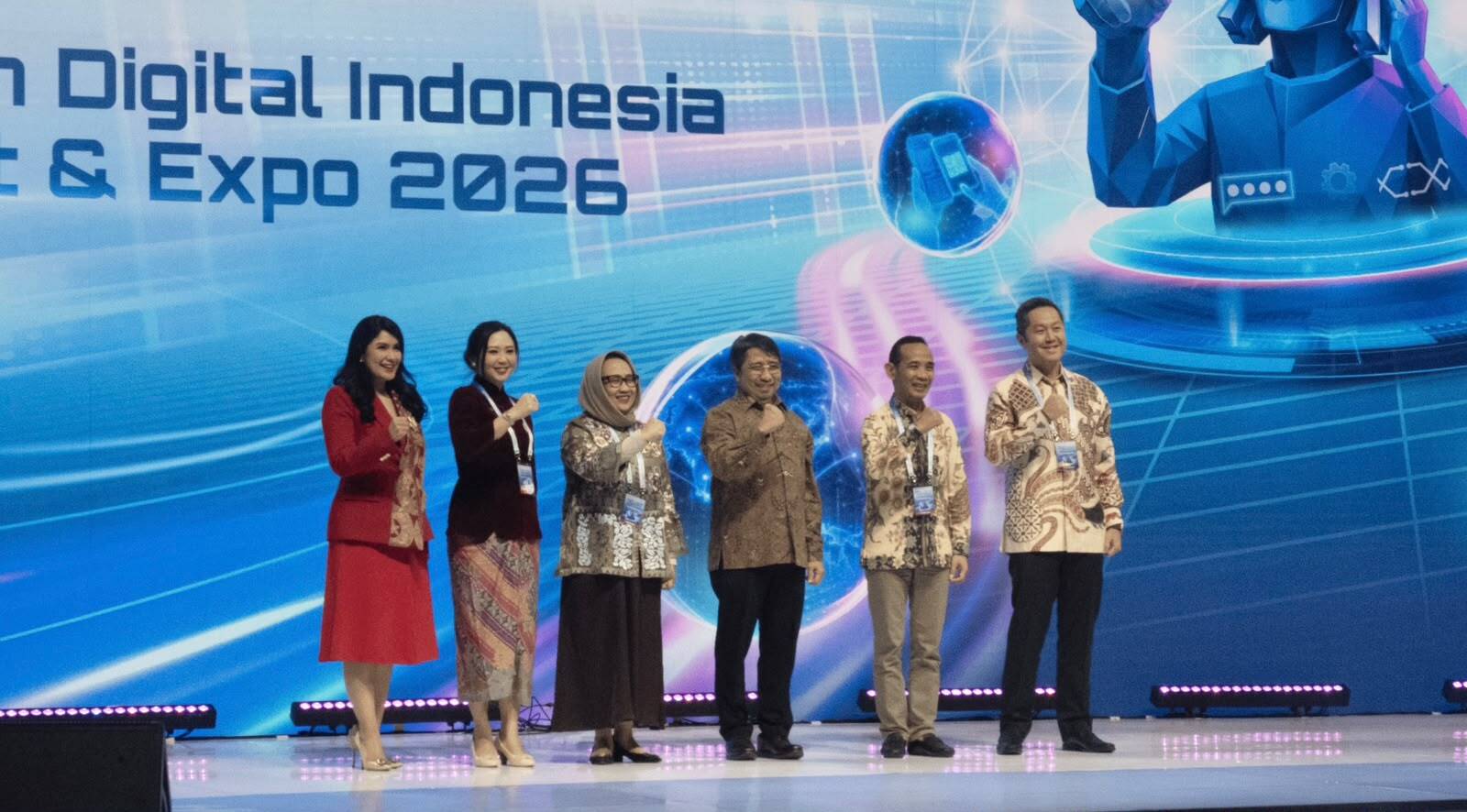
These issues were discussed at the Indonesia Digital Economy and Finance Festival and Indonesia Fintech Summit and Expo (FEKDI x IFSE) 2026, which brought together government representatives, regulators, industry associations, businesses, academics, and digital talent. During one of the panel discussions, Gonthor Ryantori Aziz, Head of the Financial Technology Innovation Regulation and Licensing Department at the Financial Services Authority (OJK), emphasized the importance of balancing innovation, governance, and consumer protection.
“Innovation can only thrive when it earns public trust. It is not simply about technological sophistication, but about breakthroughs that gain public confidence through sound governance and effective risk mitigation,” Gonthor said.
Addressing the risks associated with AI, Niki Luhur, Founder and Group CEO of VIDA and Supervisory Board Member of AFTECH, highlighted how easy access to AI tools has made deepfake impersonation increasingly convincing and difficult to detect, particularly in remote user onboarding and transaction authentication.
Deepfake threats now extend beyond visual manipulation in front of a camera. They can also be injected into the data stream during identity verification through a virtual camera, a technique known as an injection attack. Deepfakes used for fraud take various forms, ranging from synthetic faces generated using widely circulated ID card photos or selfies, to face-swapped videos and recordings of genuine verification sessions replayed to impersonate users.
“We cannot build technology reactively. As threats such as deepfakes evolve at an increasingly rapid pace, the industry must also develop preventive technologies. Consumer protection must be an integral part of innovation, not something added as an afterthought,” Niki said.
Echoing this view, Gretel Griselda, Chair of Committee 2 on Retail Payment Systems at the Indonesian Payment System Association (ASPI), noted that strengthening digital identity across the payment ecosystem is not just about verifying who initiates a transaction, but also ensuring that the transaction is conducted by the right person with the proper authorization.
She added that security must also be strengthened through a fraud intelligence approach that helps identify suspicious transaction patterns, including links to intermediary accounts known as mule accounts and other potentially illicit activities.
“Security must therefore be implemented in layers throughout the user journey, from identity and document verification to device checks and transaction monitoring. This comprehensive approach is essential to maintaining security while strengthening public trust in the payment ecosystem,” Gretel said.
At the FEKDI x IFSE 2026 product showcase, VIDA presented its layered security solutions for account opening, account access, and document signing. One of these, Deepfake Shield, is designed to detect photos, video recordings, AI-generated faces, and videos injected through virtual cameras during account opening. Document verification also helps detect fake or digitally manipulated identity cards. These safeguards are complemented by ID FraudShield, which analyzes device and network signals to identify indications of emulator use or virtual camera applications.
To secure account access, device-bound biometric authentication helps ensure that the user is the legitimate account holder. For document signing, VIDA Sign for Enterprise links each signature to a verified identity, ensuring that the entire process is recorded and traceable.
VIDA also introduced VerifyNow, a no-code identity verification service currently available only to selected partners. Businesses can configure verification flows based on their needs without complex integration, then send users personalized links to complete the verification process. Through these links, users can verify their identities using VIDA’s document verification and deepfake detection technologies.
“From the fintech industry’s perspective, sustainable innovation must go hand in hand with consumer protection, particularly in addressing threats such as deepfakes. We must continue to develop preventive solutions to keep Indonesia’s digital economy safe and trustworthy,” Niki concluded.
For more information, visit www.vida.id.