Choosing electronic signature software is no longer simply about finding a way to sign documents online. For small and medium-sized businesses, the more important question is whether the software fits into everyday document workflows without adding unnecessary complexity.
Businesses may use electronic signatures for contracts, invoices, purchase orders, HR documents, proposals, approvals, and other documents that require signatures. As these workflows become more frequent, features such as document tracking, signer verification, and secure records become increasingly relevant.
For SMEs in Malaysia, a practical shortlist should therefore look beyond the signature function itself. The right platform should support the way documents are created, sent, signed, tracked, and stored throughout the transaction.
Read More: Fraud Doesn’t Care About Company Size, It Looks for Security Gaps
What to Look for in Electronic Signature Software
There are several capabilities worth considering when evaluating an electronic signature platform. The priority may differ depending on the business and the types of documents it handles, but a few features are particularly relevant to day-to-day use.
1. Document tracking
Once a document has been sent for signing, the business should be able to see where it stands.
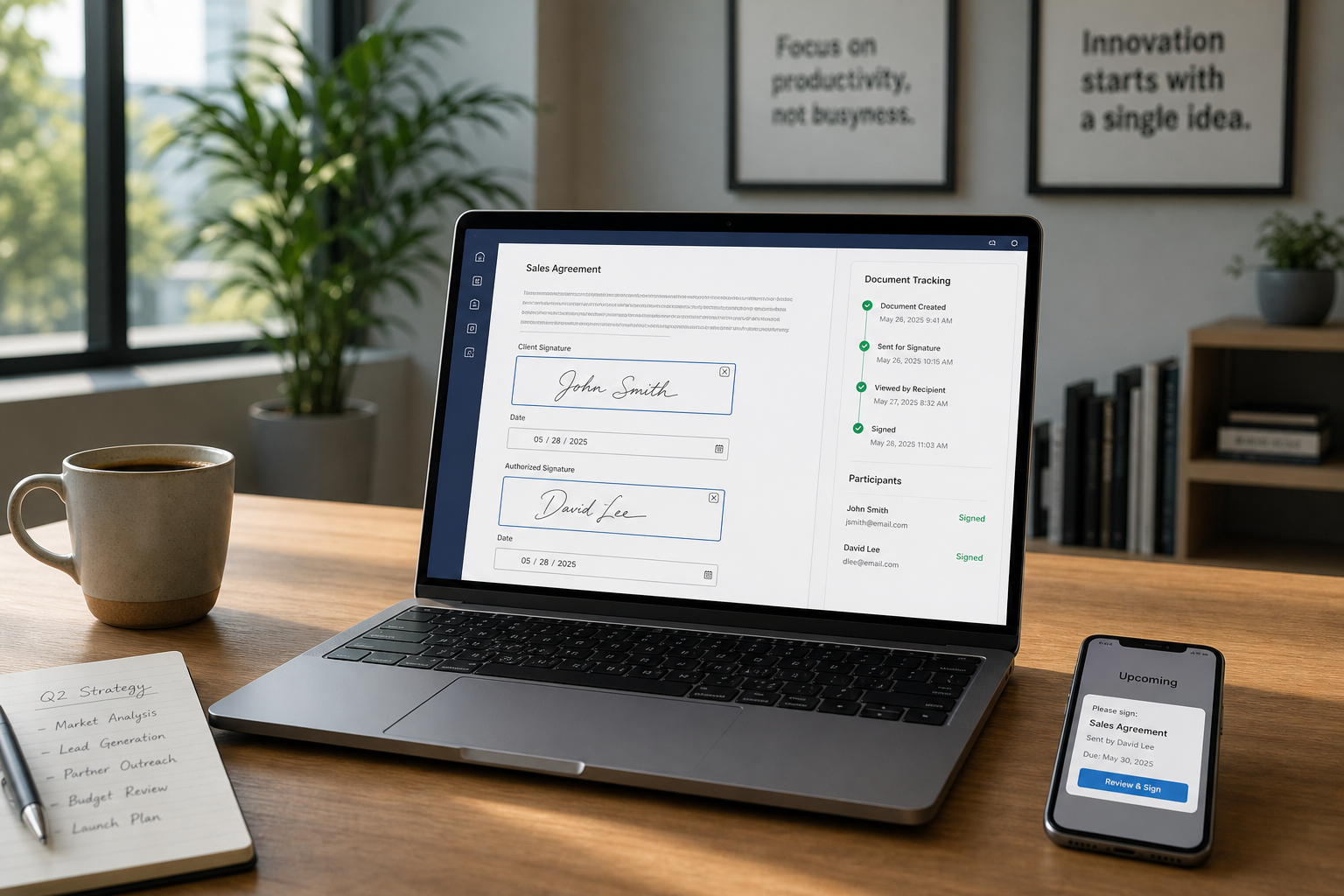
Document tracking provides visibility into the signing process, including which documents have been sent and the status of the signing transaction. This becomes especially useful when several documents or signers are involved at the same time.
Instead of following up through separate messages or emails, businesses can manage signing activity through a central workflow.
2. Audit trails and tamper-proof records
An electronic signature is only one part of a signing transaction. Businesses may also need a record of the activities surrounding the signature.
An audit trail can provide information about the signing process, while tamper-proof records help preserve the integrity of completed documents. Together, these features give businesses a clearer record to refer back to after a transaction has been completed.
This is particularly relevant for contracts, approvals, and other documents that may need to be reviewed later.
3. Signer authentication
The platform should provide an appropriate way to verify the person completing the signing action.
For example, email OTP can be used as an authentication step in an electronic signing workflow. The signer receives a one-time code through their registered email and enters it as part of the signing process.
Authentication adds a verification step around the signature and helps businesses maintain a clearer record of the signing transaction.
4. Security and document protection
Documents handled through an e-signature platform can contain contracts, financial information, HR records, or other business-sensitive information. Security should therefore be considered alongside convenience.
End-to-end encryption, tamper-proof documents, and controlled access are examples of capabilities businesses may consider when assessing a platform. Document tracking and tamper-proofing can also be particularly important for businesses that need clear records of document activity and integrity throughout the signing process.
5. Ease of implementation
For many SMEs, adopting a new business tool also means considering how much technical work is required to get started.
A ready-to-use platform can be useful when a business needs electronic signing without building the signing experience into its own software. Users can access the platform, upload documents, add signers, and start the signing process without a technical integration.
This can make the software easier to introduce into existing workflows, particularly when the immediate requirement is straightforward document signing rather than a custom implementation.
A Practical Checklist for Malaysian SMEs
Before choosing electronic signature software, businesses can use a simple checklist to compare different platforms:
- Document workflow: Can documents be uploaded, sent, signed, and tracked in one place?
- Signer verification: Does the platform provide an appropriate authentication step?
- Audit trail: Can the business review the activities associated with a signing transaction?
- Document integrity: Are completed documents protected against unauthorized changes?
- Security: What measures are available to protect business documents and signing activity?
- Ease of use: Can employees and external signers complete the process without unnecessary steps?
- Local configuration: Does the platform adapt its signing experience to the requirements of the Malaysian market?
- Integration needs: Does the business need a ready-to-use platform, or does it require integration with an existing system?
This checklist helps shift the evaluation from “Can this software add a signature?” to a broader question: “Can this software support the entire signing workflow?”
VIDA Sign for Malaysian Businesses
VIDA Sign Platform (VSP) is VIDA's ready-to-use electronic signing solution. It is designed to give businesses one place to create, send, track, and sign documents without technical integration.
For Malaysian users, the signing experience is configured for the local market. Email OTP is included in the signing flow, while transactions are tracked through an audit trail and completed documents are tamper-proof and logged.
The platform automatically adjusts its signing experience to match local market requirements, so businesses can get started without manual setup.
Read More: e-Sign is Now Available in Malaysia
For SMEs looking for electronic signature software, this combination of document management, signer verification, tracking, and a ready-to-use workflow can provide a practical starting point for moving business documents into a more structured digital signing process.
The right e-signature software ultimately depends on how a business handles its documents today. By evaluating the complete workflow rather than the signature function alone, SMEs can choose a platform that fits their operational needs while providing clearer visibility and records throughout the signing process.
.png)